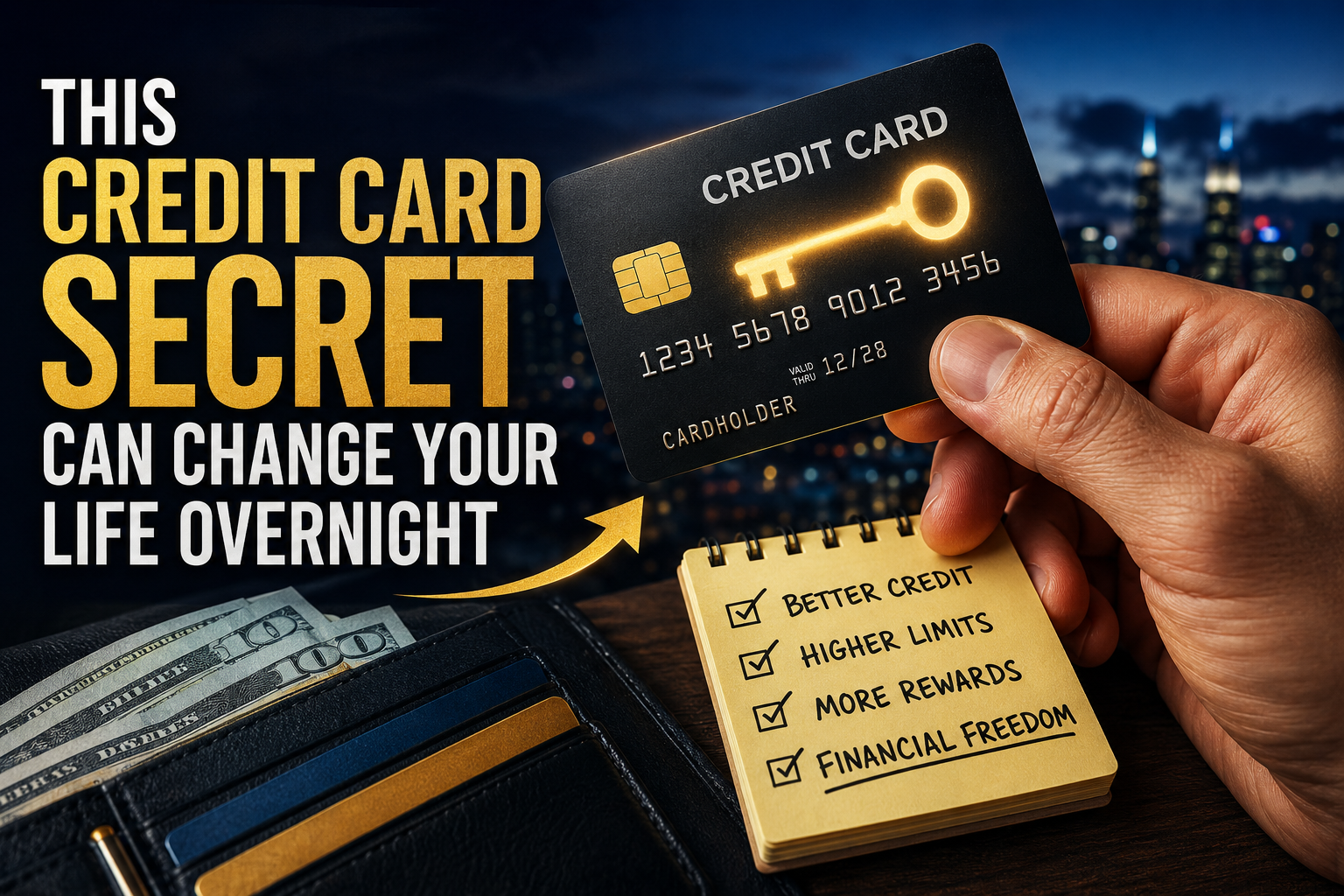
Credit cards are often seen as a double-edged sword. For some, they represent convenience, rewards, and financial flexibility. For others, they are a fast track to debt and financial stress. But what if the real problem isn’t the credit card itself—but how most people use it?
There’s a powerful strategy—almost like a “secret”—that financially savvy individuals have been using for years. It doesn’t involve hacks, illegal tricks, or anything shady. Instead, it’s about understanding how the system works and using it to your advantage.
When applied correctly, this strategy can improve your credit score, increase your credit limit, unlock premium benefits, and even save you thousands of dollars over time. And the best part? You can start seeing results almost immediately.
Let’s break down exactly what this credit card secret is—and how it can transform your financial life faster than you think.
The Real Secret: Control Your Credit Utilization
If there’s one metric that can change your financial life overnight, it’s your credit utilization ratio.
Credit utilization is the percentage of your available credit that you’re currently using. For example, if you have a $1,000 limit and you’ve spent $500, your utilization is 50%.
Here’s the secret:
👉 Keeping your utilization below 30%—and ideally under 10%—can dramatically boost your credit score.
Why does this matter so much? Because lenders see high utilization as a sign of risk. Even if you pay your bill on time, using too much of your available credit signals that you might be financially stretched.
Now here’s where it gets powerful:
Lowering your utilization—even before your billing cycle closes—can cause your credit score to increase almost instantly when reported.
That means you could go from “average” to “excellent” credit faster than you imagined—without earning more money or opening new accounts.
The Mid-Cycle Payment Strategy
This is where things start to feel like a real “hack.”
Most people only pay their credit card once a month—after receiving the statement. But what they don’t realize is that credit bureaus often receive your balance before that payment is made.
That’s where the mid-cycle payment comes in.
Instead of waiting, you pay down your balance BEFORE your statement closes.
Example:
- You spend $800 on a $1,000 limit card
- Before the statement date, you pay $700
- Your reported balance becomes just $100
This drops your utilization from 80% to 10% instantly.
The result?
👉 A significant boost in your credit score
👉 Better chances of limit increases
👉 Lower perceived risk by lenders
This one move alone is used by people who consistently maintain high credit scores.
Why Timing Changes Everything
Timing is one of the most overlooked factors in personal finance.
When it comes to credit cards, two dates matter more than anything:
- Statement closing date
- Payment due date
Most people focus only on the due date—but the real game happens before the statement closes.
Your balance at the moment your statement is generated is what gets reported to credit bureaus.
That means you could:
- Spend heavily
- Pay it down before closing
- Still appear as a low-risk user
This creates a powerful illusion: you’re actively using your card, but responsibly managing it.
And lenders LOVE that.
It’s not about avoiding your credit card—it’s about controlling how your usage is perceived.
The Hidden Power of Credit Limit Increases
Once you start managing your utilization and timing correctly, something interesting begins to happen.
Banks start trusting you more.
And when that happens, they often reward you with higher credit limits.
Here’s why this matters:
Let’s say you have a $1,000 limit and spend $300 → 30% utilization
Now imagine your limit increases to $3,000 → same $300 becomes just 10%
Without changing your spending habits, your credit profile improves dramatically.
This creates a snowball effect:
- Higher limits → lower utilization
- Lower utilization → higher credit score
- Higher score → even more approvals and benefits
Eventually, you reach a point where your credit works for you—not against you.
Turning Credit Cards Into Financial Tools
Most people use credit cards emotionally.
Smart people use them strategically.
Here’s the shift:
Instead of seeing your credit card as “extra money,” start seeing it as a financial tool.
Use it to:
- Build credit history
- Earn rewards and cashback
- Track spending
- Improve financial reputation
When used correctly, your credit card becomes a bridge to better opportunities:
- Lower interest rates
- Higher loan approvals
- Access to premium financial products
It’s not about spending more—it’s about using what you already spend more intelligently.
The Mistakes That Destroy This Strategy
Now that you understand the “secret,” it’s just as important to know what can ruin it.
Here are the biggest mistakes to avoid:
❌ Only paying the minimum
This leads to interest and long-term debt.
❌ Maxing out your card
Even if you pay it later, high utilization hurts your score.
❌ Missing payments
One late payment can undo months of progress.
❌ Applying for too many cards at once
This signals risk to lenders.
❌ Ignoring your statement date
This is where most people lose control of their credit profile.
Avoid these mistakes, and the strategy becomes incredibly powerful.
Conclusion
The truth is, there’s no magic trick when it comes to credit cards—just knowledge that most people never learn.
By controlling your credit utilization, making mid-cycle payments, and understanding timing, you can completely change how lenders see you.
And that can open doors you didn’t even know existed.
Better credit scores.
Higher limits.
More financial freedom.
It doesn’t require more money.
It requires smarter moves.
And once you start applying this strategy, you’ll realize something important:
👉 The system was never against you—you just weren’t taught how to use it.