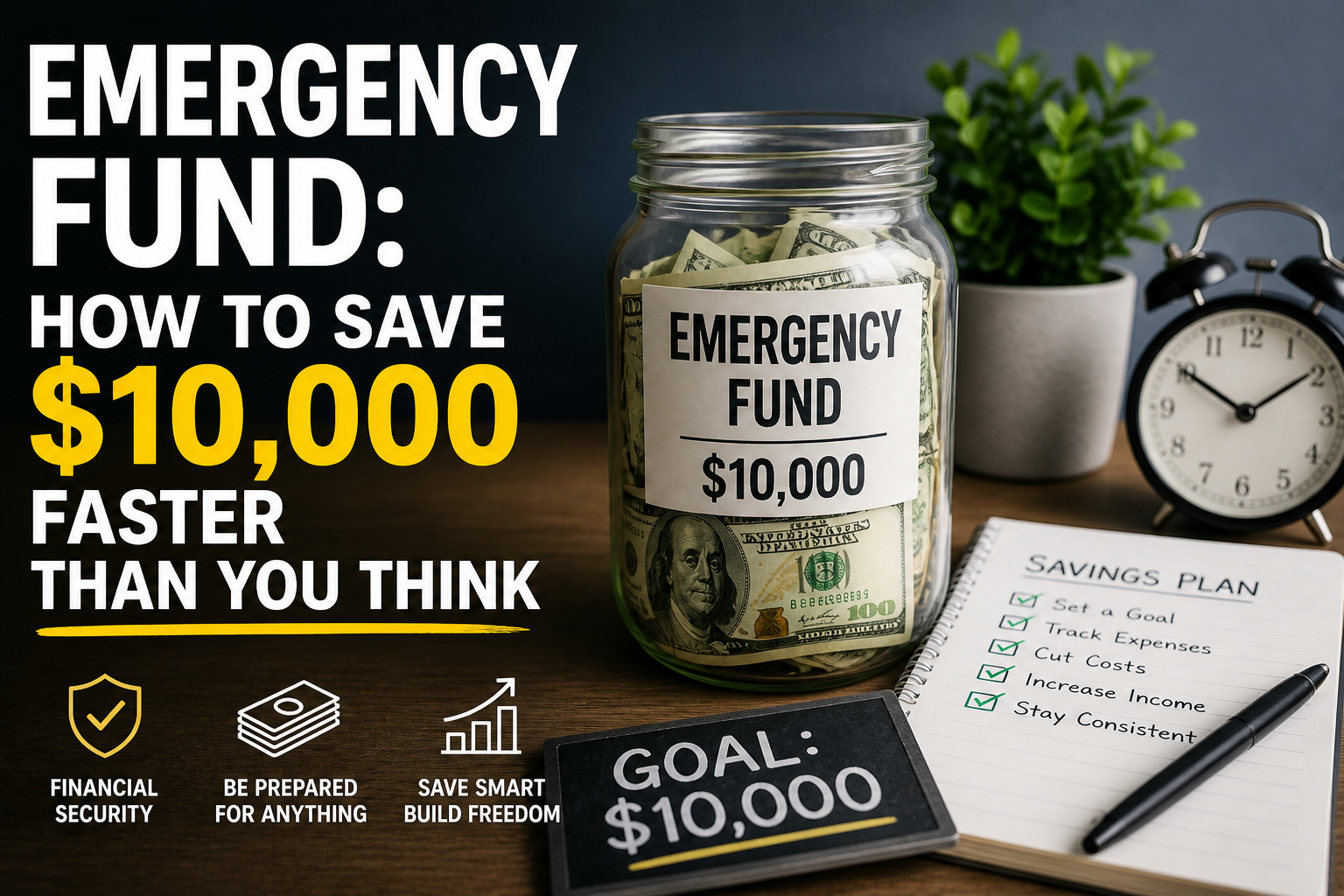
Building an emergency fund is one of the smartest financial moves you can make—but for many people, saving $10,000 feels impossible. Between bills, daily expenses, and unexpected costs, it can seem like there’s never enough left over to save.
Here’s the truth: saving a large amount of money isn’t about earning more—it’s about using what you already have more effectively.
With the right strategy, discipline, and mindset, reaching a $10,000 emergency fund is not only possible—it can happen faster than you think.
This guide will show you exactly how to do it, step by step.
Why an Emergency Fund Is Non-Negotiable
Life is unpredictable. Emergencies don’t schedule themselves—they happen when you least expect them.
Some common unexpected expenses include:
- Medical bills
- Car repairs
- Job loss
- Home maintenance
- Family emergencies
Without savings, most people turn to credit cards or loans, which creates a cycle of debt that’s hard to escape.
An emergency fund acts as your financial safety net. It protects you from:
- Debt accumulation
- Financial stress
- Desperate decisions
More importantly, it gives you peace of mind, which is something money alone can’t buy.
Set a Clear and Realistic Savings Plan
Saving $10,000 starts with a simple but powerful step: breaking it down.
Instead of focusing on the full amount, divide it into smaller goals:
- $10,000 = $833/month for 12 months
- Or = $166/week
- Or ≈ $23/day
Suddenly, the goal feels more achievable.
Create your plan:
- Choose a timeline (6, 12, or 18 months)
- Calculate how much you need to save weekly
- Track your progress consistently
When you focus on small wins, motivation stays high—and consistency becomes easier.
Cut Hidden Expenses Immediately
One of the fastest ways to boost your savings is by eliminating money leaks.
Most people waste money without realizing it—subscriptions, impulse purchases, and convenience spending.
Start here:
- Cancel unused subscriptions
- Reduce eating out
- Avoid impulse online shopping
- Limit delivery services
- Compare prices before buying
Even cutting $10–$20 per day can significantly accelerate your savings.
Remember: you don’t need to sacrifice everything—just the things that don’t truly matter.
Increase Your Income Strategically
Cutting expenses helps—but increasing income can speed up the process dramatically.
You don’t need a second full-time job. Focus on flexible, scalable options:
Popular ways to earn extra money:
- Freelancing online
- Selling digital products
- Driving or delivery apps
- Remote side gigs
- Offering local services
Even an extra $300–$500 per month can cut your timeline in half.
The key is consistency—not perfection.
Automate Your Savings for Faster Results
One of the biggest mistakes people make is saving “what’s left.”
Instead, flip the strategy:
👉 Save first, spend later
How to automate:
- Set up automatic transfers to a savings account
- Schedule transfers right after payday
- Use separate accounts to avoid temptation
Automation removes decision-making, which is where most people fail.
When saving becomes automatic, your progress becomes inevitable.
Stay Consistent and Avoid Common Mistakes
Saving $10,000 isn’t about intensity—it’s about consistency.
Here are common mistakes to avoid:
❌ Waiting for the “perfect time” to start
❌ Saving inconsistently
❌ Using savings for non-emergencies
❌ Giving up after small setbacks
Instead:
- Stay committed to your plan
- Accept that progress may be slow at times
- Keep going—even when it feels difficult
Consistency beats motivation every time.
Conclusion
Saving $10,000 may seem overwhelming at first—but when you break it down, eliminate waste, increase income, and stay consistent, it becomes completely achievable.
You don’t need a massive salary.
You don’t need perfect discipline.
You just need a system—and the willingness to follow it.
An emergency fund isn’t just money in the bank.
It’s security, freedom, and control over your life.
Start today—even if it’s small.
Because the sooner you begin, the sooner you’ll reach your goal. 🚀