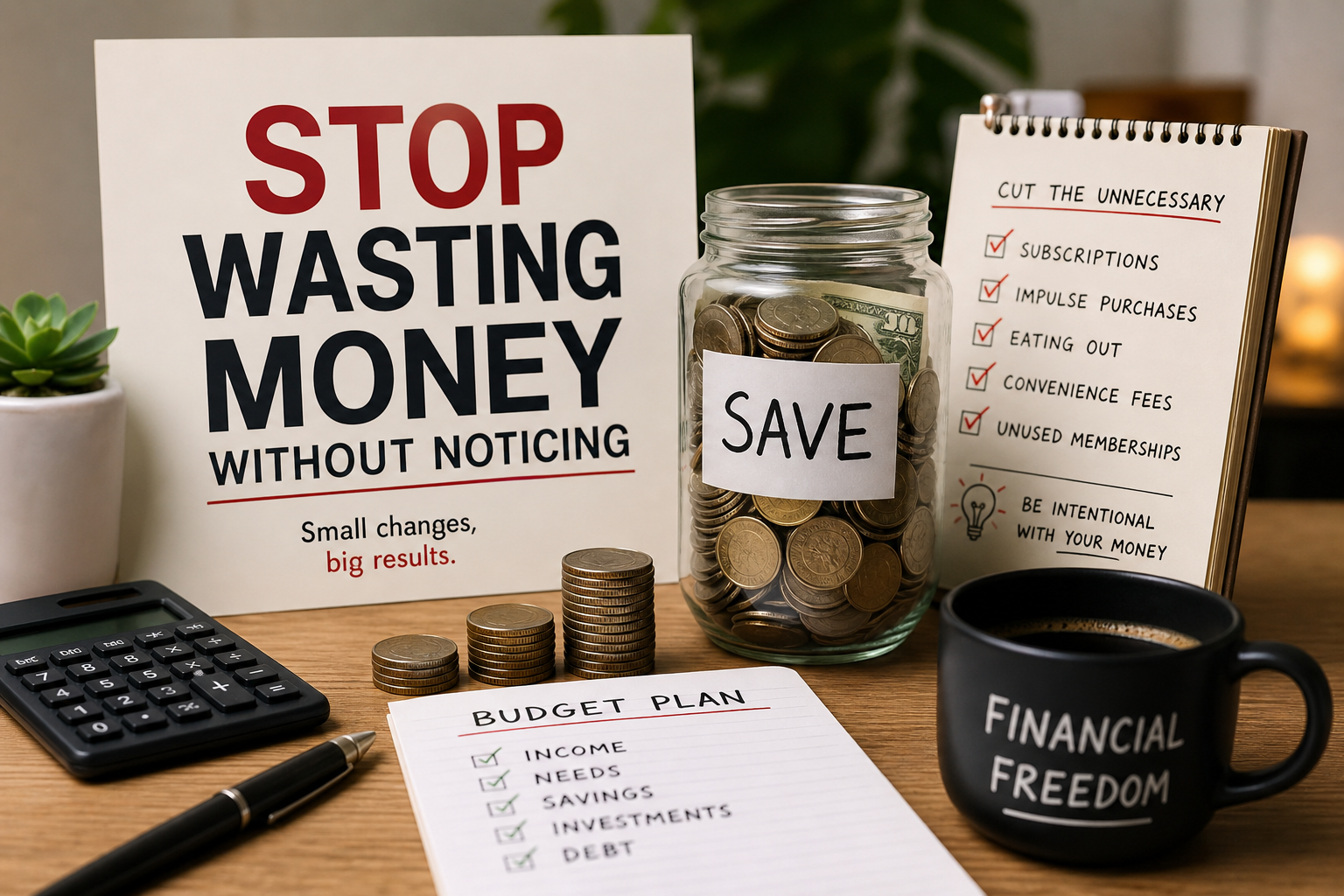
Introduction
Most people don’t realize how much money they lose every single month—not through big purchases, but through small, unnoticed expenses that quietly drain their finances. It’s not always about reckless spending. In fact, many financially responsible individuals still struggle to build savings simply because they’re unaware of where their money is actually going.
These hidden leaks—subscriptions you forgot about, impulse purchases, convenience spending, and poor habits—can easily add up to hundreds or even thousands of dollars per year. The good news? Once you identify and fix these silent money drains, you can dramatically improve your financial situation without needing to earn more.
In this guide, you’ll learn how to uncover these invisible expenses, change your habits, and take full control of your money—without feeling deprived.
The Hidden Psychology Behind Overspending
One of the biggest reasons people waste money without noticing is psychological. Spending is often emotional, automatic, and deeply tied to habits rather than logic.
Many purchases are triggered by:
- Stress or boredom
- Social pressure
- Instant gratification
- Marketing influence
For example, buying a coffee every morning may feel insignificant. But over time, it becomes a routine—one you stop questioning. Your brain categorizes it as “normal,” not as spending.
Another powerful factor is decision fatigue. After making many decisions throughout the day, your brain becomes tired. This leads to impulsive purchases, especially at night or after work.
To break this cycle, you must start recognizing why you spend—not just what you spend.
Small Expenses That Add Up Fast
The biggest financial leaks are rarely obvious. They hide in everyday spending habits that feel harmless.
Here are some common examples:
- Daily coffee or snacks
- Food delivery and takeout
- Unused subscriptions
- Ride apps instead of walking
- Online impulse purchases
Individually, these seem small. But let’s put it into perspective:
- $5 per day = $150 per month
- $150 per month = $1,800 per year
That’s money that could be invested, saved, or used to improve your life.
The key insight here is simple: small expenses are dangerous because they don’t feel dangerous.
Subscription Traps You Forgot About
Subscriptions are one of the easiest ways to lose money without realizing it. Streaming services, apps, software, memberships—these charges are often automatic and go unnoticed for months.
Common subscription traps include:
- Free trials that turned into paid plans
- Multiple streaming services you rarely use
- Apps charging monthly fees
- Gym memberships you stopped attending
Because these payments are automatic, your brain stops registering them as spending.
How to fix this:
- Review your bank statements monthly
- Cancel anything you haven’t used in 30 days
- Use only 1–2 essential services
- Avoid free trials unless you set a reminder to cancel
Even cutting $30–$50 per month in subscriptions can make a significant difference over time.
The Danger of Convenience Spending
Modern life is built for convenience—but convenience comes at a cost.
Food delivery, ride apps, and one-click shopping make spending effortless. And that’s exactly the problem.
When something becomes too easy, you stop thinking about the cost.
Examples:
- Ordering food instead of cooking
- Paying for delivery instead of picking it up
- Using express shipping
- Buying instead of comparing prices
Convenience creates a mindset of “just this once,” which quickly becomes a habit.
The solution:
Introduce friction back into your spending:
- Wait 24 hours before buying non-essential items
- Remove saved credit cards from apps
- Cook more meals at home
- Compare prices before purchasing
Making spending slightly harder forces your brain to think again.
How to Build Awareness of Your Spending
You can’t fix what you don’t track. The first step to stopping money waste is awareness.
Most people underestimate their spending because they rely on memory instead of data.
Simple strategies to increase awareness:
1. Track every expense for 7 days
Write down everything you spend—no matter how small. This exercise alone can be eye-opening.
2. Categorize your spending
Break it into:
- Needs (rent, bills, food)
- Wants (entertainment, eating out)
- Waste (impulse, unused services)
3. Review weekly
Look for patterns:
- Where are you overspending?
- What surprised you?
- What can you cut immediately?
Awareness changes behavior. Once you see the problem, it becomes much easier to fix it.
Simple Habits to Stop Wasting Money
You don’t need extreme budgeting or drastic lifestyle changes. Small adjustments can lead to big results over time.
Here are powerful habits to adopt:
1. Use the 24-hour rule
Before buying anything non-essential, wait one day. Most impulse purchases disappear after time.
2. Set spending limits
Decide in advance how much you can spend on things like food, entertainment, or shopping.
3. Automate savings
Move money into savings as soon as you receive it. This reduces the temptation to spend.
4. Shop with a list
Whether it’s groceries or online shopping, always have a clear plan.
5. Avoid emotional spending triggers
Recognize when you’re spending due to stress or boredom—and replace it with healthier habits.
6. Focus on value, not price
Cheap doesn’t always mean better. Buy things that last and truly add value to your life.
Conclusion
Wasting money without noticing is one of the biggest obstacles to financial growth—but it’s also one of the easiest problems to fix once you become aware of it.
The truth is, most people don’t need to earn more money to improve their finances. They simply need to stop losing the money they already have.
By identifying hidden expenses, reducing unnecessary subscriptions, avoiding convenience traps, and building simple habits, you can take control of your finances and start making real progress.
It’s not about being perfect. It’s about being intentional.
Every dollar you stop wasting is a dollar you can use to build a better future.