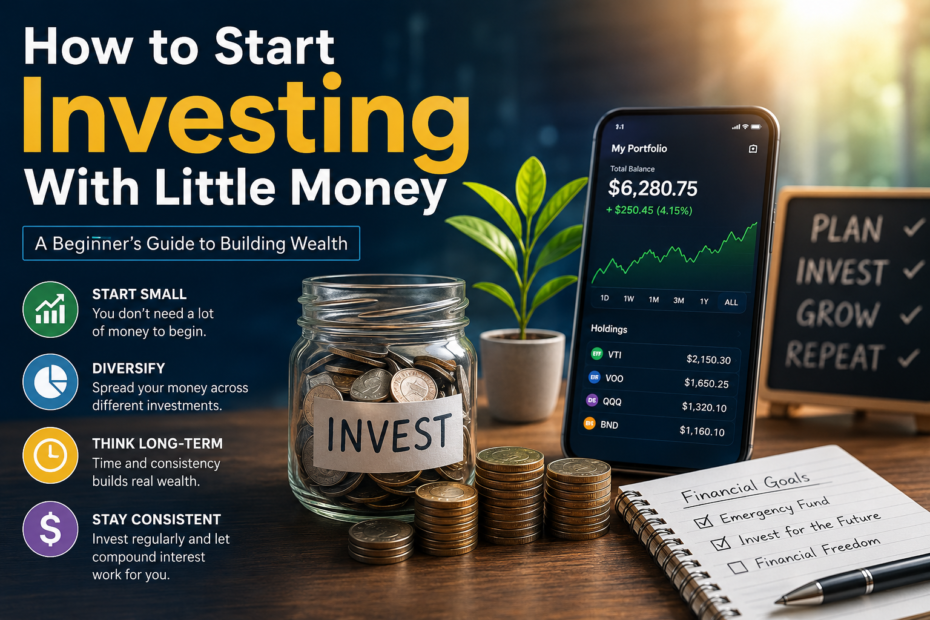
Investing used to be something associated only with wealthy people, financial experts, or large corporations. Today, however, technology and modern financial platforms have completely changed the way people build wealth. Millions of Americans are now investing with small amounts of money and creating long-term financial security without needing a huge salary or a large inheritance.
The biggest mistake many beginners make is believing they need thousands of dollars before they can start investing. In reality, some of the most successful investors began with very little and grew their wealth gradually over time through discipline, consistency, and smart financial decisions.
Economic uncertainty, inflation, rising living costs, and concerns about retirement are pushing younger generations to explore new ways to protect their money. Instead of allowing savings to lose value over time, more people are turning to investments such as ETFs, stocks, and diversified portfolios to create long-term financial growth.
Understanding how investing works does not require a finance degree. With the right strategy, even beginners with limited budgets can start building a strong financial future. The key is learning the basics, avoiding common mistakes, and staying focused on long-term growth instead of quick profits.
Why More Americans Are Investing Than Ever Before
Over the last few years, investing has become far more accessible than in previous generations. Mobile investment apps, commission-free trading platforms, and financial education available online have encouraged millions of new investors to enter the market.
Inflation has also played a major role in this shift. Traditional savings accounts often offer low interest rates that struggle to keep up with rising prices. As the cost of living increases, many Americans are realizing that simply saving money is no longer enough to preserve purchasing power.
Young adults especially are becoming more financially aware. Instead of relying entirely on traditional retirement systems, they are taking control of their own financial future by investing earlier in life. Many understand that starting small today can potentially lead to significant wealth decades later.
Another reason for the growing popularity of investing is the increasing awareness of compound growth. People are beginning to realize that time in the market is often more important than trying to perfectly predict market movements.
Investing is no longer viewed only as a luxury for the wealthy. It has become a financial tool that ordinary people use to create stability, independence, and long-term opportunities.
Understanding the Difference Between Saving and Investing
One of the most important lessons for beginners is understanding the difference between saving money and investing money.
Saving is generally focused on protecting money for short-term needs or emergencies. Savings accounts are useful for building emergency funds, paying unexpected expenses, or preparing for large purchases in the near future. The main advantage of saving is security and easy access to funds.
Investing, on the other hand, focuses on growing money over time. Investments involve some level of risk because markets fluctuate, but they also provide the opportunity for significantly higher returns compared to traditional savings accounts.
Many people mistakenly keep all their money in savings accounts for decades. While this may feel safe, inflation can slowly reduce the real value of those savings over time. This means money may lose purchasing power if it grows slower than inflation.
Successful financial planning usually involves both saving and investing. Savings provide short-term protection, while investments help create long-term wealth and financial independence.
Understanding this balance is essential for building a healthy financial future.
Best Investment Options for Beginners With Little Money
Starting with a small amount of money does not limit investment opportunities as much as people think. Today, many beginner-friendly investment options are available with low minimum requirements.
ETFs
Exchange-Traded Funds, commonly known as ETFs, have become one of the most popular investment choices for beginners. ETFs allow investors to buy a collection of stocks or assets in a single investment, helping reduce risk through diversification.
Many young investors prefer ETFs because they are simple, affordable, and less risky than buying individual stocks. Instead of depending on the success of one company, ETFs spread investments across many businesses and industries.
Fractional Shares
Fractional shares allow people to buy portions of expensive stocks instead of purchasing full shares. This means beginners can invest in major companies with only a small amount of money.
This innovation has made investing far more accessible to ordinary people.
Retirement Accounts
Retirement accounts such as IRAs and employer-sponsored plans can help investors grow money over time while also offering potential tax advantages.
Starting retirement investing early can dramatically increase long-term wealth due to compound growth.
Index Funds
Index funds remain one of the safest and most recommended investment strategies for beginners. They are designed to follow the performance of a market index and usually offer lower fees than actively managed funds.
Long-term investors often prefer index funds because they provide diversification and stable growth potential.
How Compound Interest Builds Wealth Over Time
Compound growth is one of the most powerful concepts in investing. It occurs when investment earnings begin generating additional earnings over time.
Albert Einstein is often credited with describing compound interest as one of the most powerful forces in finance because small investments can grow significantly over long periods.
For example, someone who invests consistently over several decades may accumulate far more wealth than someone who starts later, even if the later investor contributes larger amounts.
The secret behind compound growth is time and consistency. Investors who remain patient and continue contributing regularly often benefit the most.
Many beginners underestimate the importance of starting early because they focus too much on how little money they currently have. In reality, small investments made consistently can become substantial over time.
Compound growth rewards discipline rather than perfection. Investors do not need to predict the market perfectly to benefit from long-term investing.
This is one reason why financial experts often encourage people to begin investing as soon as possible, even with limited funds.
Common Investment Mistakes Beginners Should Avoid
While investing offers great opportunities, beginners often make mistakes that can slow financial progress.
Trying to Get Rich Quickly
One of the biggest mistakes is chasing fast profits through risky investments or market speculation. Social media has increased the popularity of unrealistic investment expectations, leading many people to take unnecessary risks.
Successful investing usually requires patience and long-term thinking.
Investing Without Research
Some investors buy stocks or assets based only on trends, online hype, or emotional decisions. Understanding what you are investing in is extremely important.
Research and education can help reduce avoidable mistakes.
Panic Selling During Market Drops
Financial markets naturally rise and fall over time. Many beginners panic during market downturns and sell investments at losses.
Experienced investors often understand that short-term volatility is a normal part of long-term investing.
Ignoring Diversification
Putting all money into one investment can create unnecessary risk. Diversification helps reduce exposure to major losses by spreading investments across different assets.
Waiting Too Long to Start
Many people delay investing because they believe they need more money or perfect timing. Unfortunately, waiting often becomes one of the costliest mistakes because valuable years of compound growth are lost.
Starting early, even with small amounts, is usually more effective than waiting for ideal conditions.
Building a Long-Term Investment Strategy
Creating wealth through investing is rarely about luck. It usually depends on consistency, discipline, and long-term planning.
A strong investment strategy begins with clear financial goals. Some people invest for retirement, while others focus on buying a home, creating passive income, or achieving financial independence.
Risk tolerance is also important. Younger investors may feel comfortable taking more risk because they have more time to recover from market downturns. Others may prefer safer and more conservative investment options.
Automating investments is another effective strategy. Many successful investors contribute automatically every month regardless of market conditions. This approach removes emotional decision-making and creates long-term consistency.
Financial education should also remain a continuous process. Markets evolve, economic conditions change, and investment opportunities shift over time. Learning continuously helps investors make more informed decisions.
Most importantly, long-term investors understand that wealth building is a gradual process rather than an overnight success story.
Conclusion
Investing with little money is no longer impossible. Modern financial tools have opened opportunities for millions of people to begin building wealth regardless of income level.
The most important step is simply getting started. Small investments made consistently over time can grow into significant financial assets through compound growth and disciplined investing.
Beginners who focus on long-term strategies, diversification, and financial education often place themselves in a stronger financial position over time. Avoiding emotional decisions and unrealistic expectations is equally important.
Economic uncertainty and inflation continue pushing more Americans toward investing as a way to protect and grow their money. Those who begin early and stay consistent may benefit the most in the years ahead.
Financial success rarely happens overnight, but patient investors who remain committed to their goals can create opportunities for long-term security, independence, and financial freedom.
FAQs
Is it possible to start investing with only a small amount of money?
Yes. Many investment platforms allow beginners to start investing with very small amounts through fractional shares, ETFs, and low-cost index funds.
Are ETFs safer than individual stocks?
ETFs are generally considered less risky because they provide diversification by spreading investments across multiple companies or assets.
How long should someone invest before seeing results?
Investing is typically most effective as a long-term strategy. While short-term gains are possible, consistent investing over many years often produces better results.
What is the biggest mistake beginner investors make?
One of the most common mistakes is trying to get rich quickly through risky investments instead of focusing on long-term growth.
Why is compound growth important?
Compound growth allows investment earnings to generate additional earnings over time, helping investments grow significantly over long periods.
Should beginners invest during economic uncertainty?
Many investors continue investing during uncertain times because long-term investing focuses on growth over many years rather than short-term market conditions.